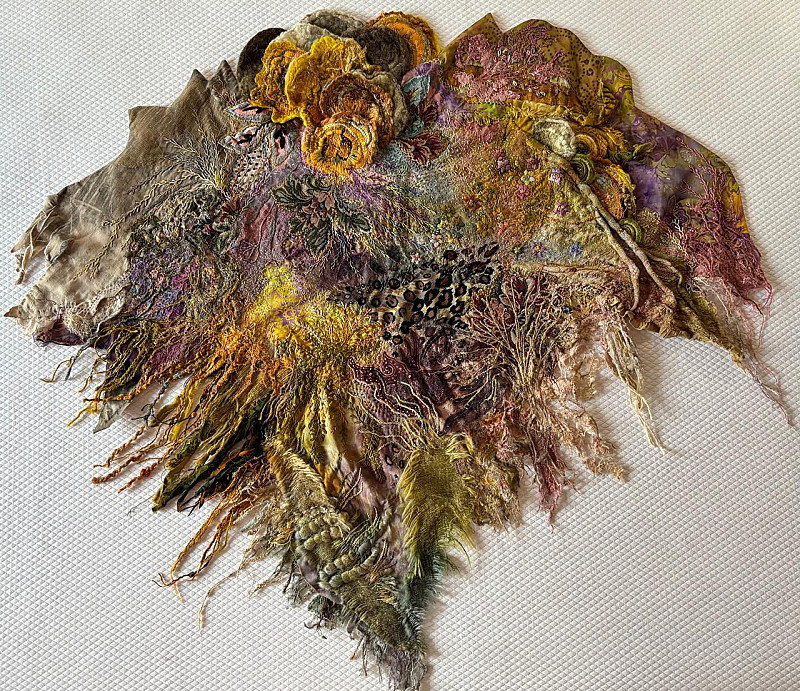
- Mycoremediation 2 – Forest Floor
- Celia de Villiers
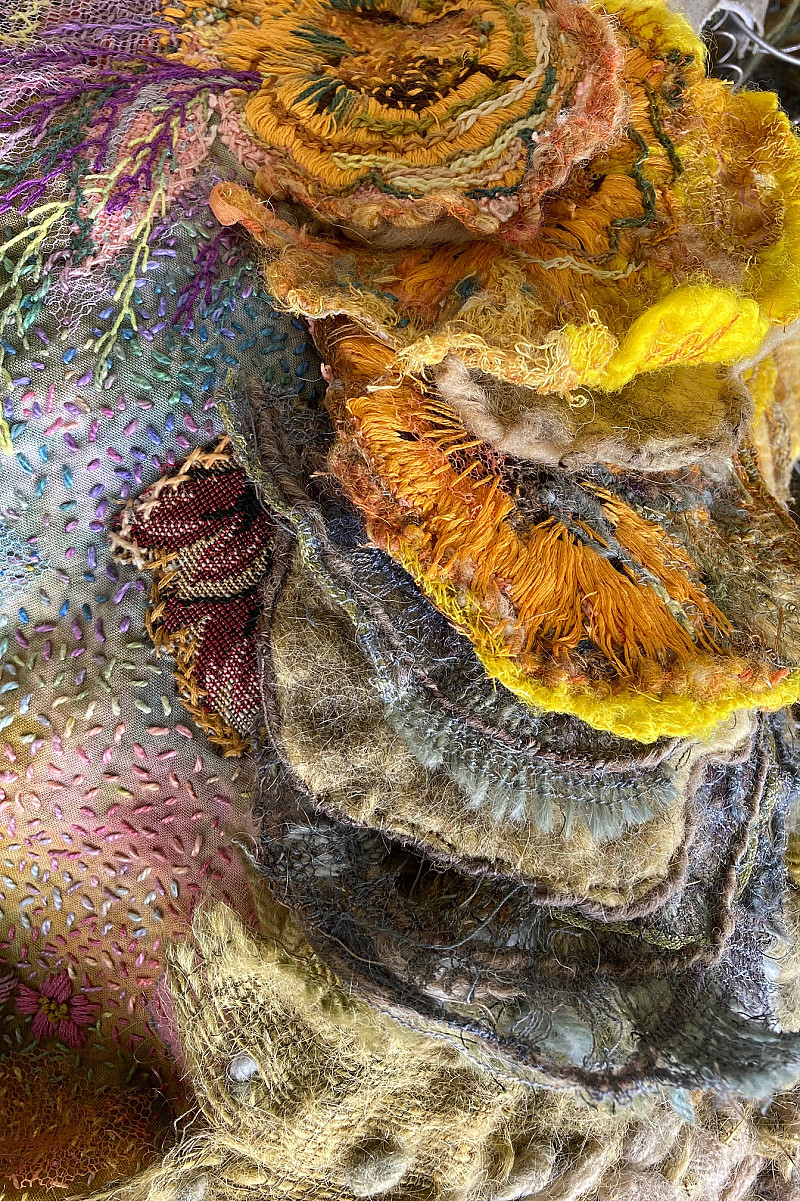
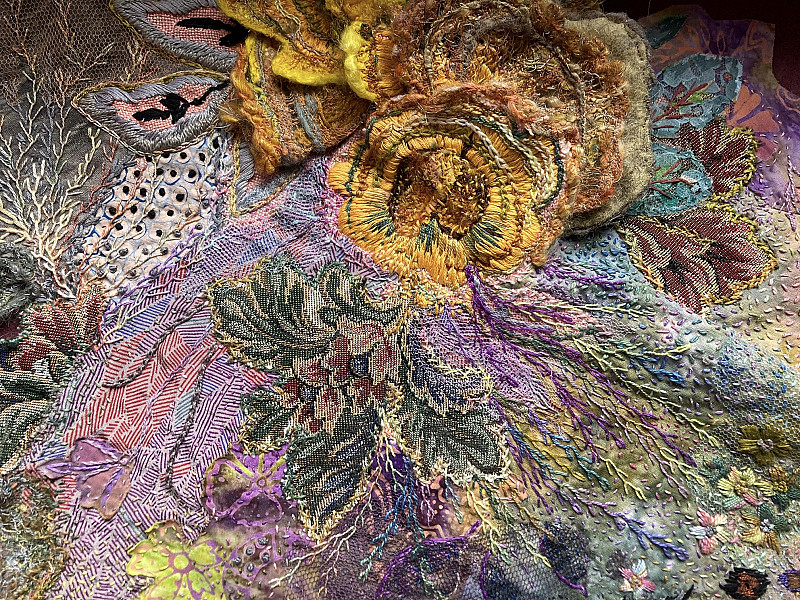
- Reclaimed fabrics, hand and machine embroidery, wet felting 2023-2026.
- L 110 cm × W 95 cm × D 2 cm
I live in a fertile forested area in central Portugal and enjoy walking through the landscape, where in certain seasons I find a variety of mushrooms.
This fungus fantasy began with a surprising discovery one early morning: a gigantic rosette of yellowish bracket fungi, Trametes versicolor (Kuo 2017), growing at the base of an olive tree. The encounter sparked my imagination because I had been reading that mycelium, the threadlike body of a fungus, plays a growing part in scientific research, with potential uses in biotechnology and cellular agriculture (Sheldrake 2020).
Bracket fungi are primary decomposers, breaking down wood and also recycling nutrients through the forest. Some can even break down pollutants, a process known as mycoremediation. In laboratory studies, Trametes versicolor has decolourised textile dyes and bound heavy metals.
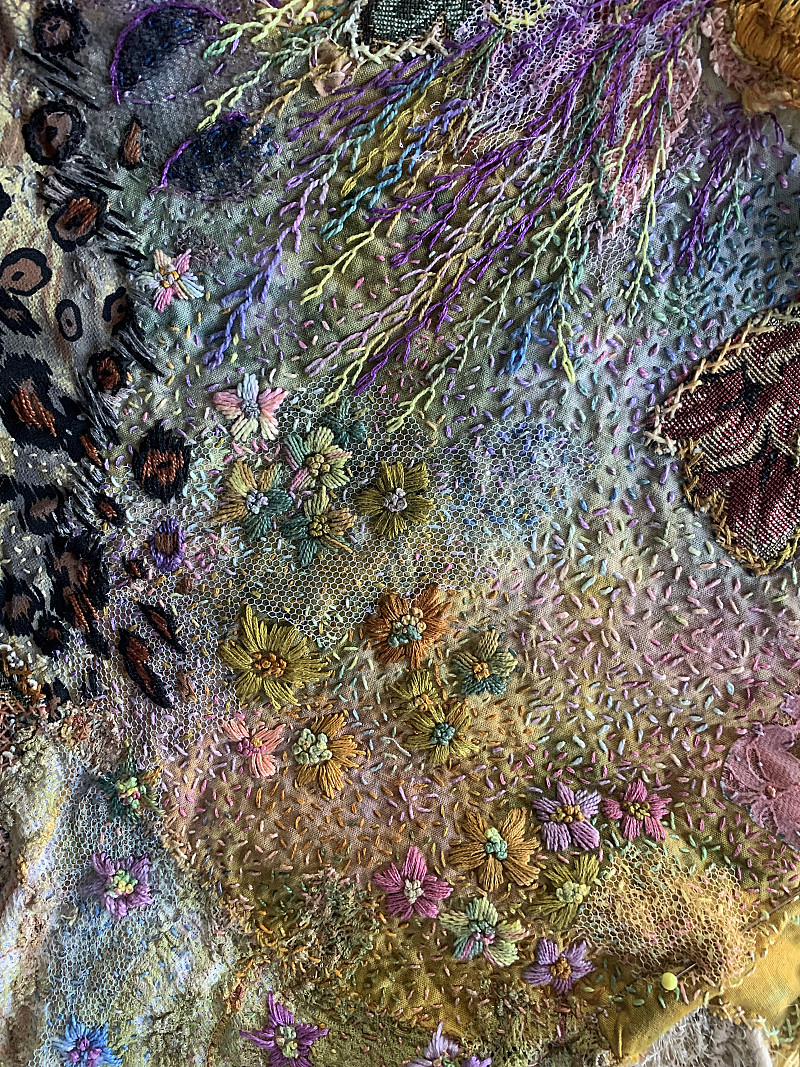
My artwork is built from layers of reclaimed fabric: dyed cloth given a second life, much as fungi turn debris into new growth. Embroidered motifs acknowledge the branching structures of mycelium, while thousands of tiny seed stitches evoke fungal spores dispersed across the forest floor.
Where I live, wildfires return every summer. The spores in this work become a metaphor for renewal: tiny, almost invisible agents carrying the potential for new life.
References
Kuo, M. (2017) Trametes versicolor. MushroomExpert.com. Available at:
http://www.mushroomexpert.com/trametes_versicolor.html (Accessed: Sept 2024).
Sheldrake, M. (2020) Entangled Life: How Fungi Make Our Worlds, Change Our Minds and Shape Our Futures.
London: The Bodley Head, ch. 7, Radical Mycology, p. 214–219.
