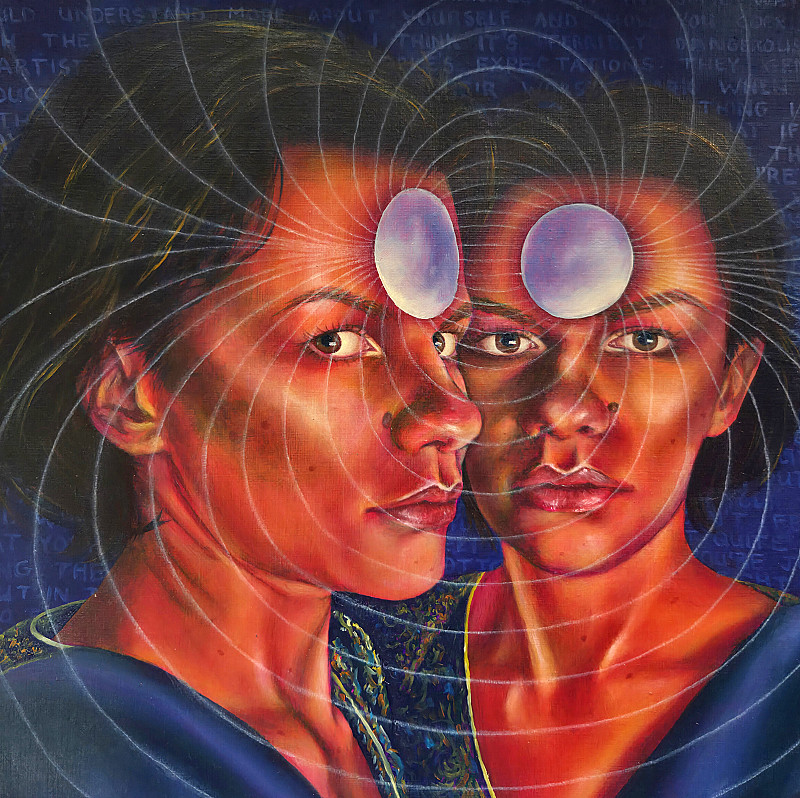
- About Being An Artist
- Sinead Fletcher
- Acrylic and oil paint on canvas
- 30 x 30 centimeters
David Bowie remains one of the most influential and transformative figures in contemporary music and visual culture, renowned for his “chameleon” approach to identity, performance, and artistic expression. His continual reinvention not only redefined the boundaries of popular culture but also established a model of creative risk-taking that has inspired generations of artists across disciplines. In About Being an Artist, Sinead Fletcher draws directly on Bowie’s philosophy of artistic practice, grounding the work in a reflective engagement with one of his interviews on the nature of creativity. An excerpt from this interview is incorporated into the artwork, forming its conceptual core. Bowie’s words emphasise the importance of self-exploration, the rejection of external expectations, and the necessity of working beyond one’s comfort zone—principles that underpin both his career and Fletcher’s interpretation of artistic identity. Visually, Fletcher references Bowie’s iconic photographic portraits, known for their theatricality and bold articulation of persona. By recreating one of these images with herself as the subject, she positions her own body and identity within the framework of Bowie’s legacy. This act of re-enactment becomes a critical and introspective process, through which Fletcher examines her evolving artistic voice. Guided by Bowie’s ethos, About Being an Artist ultimately functions as both homage and inquiry—an exploration of what it means to navigate creative practice with authenticity, vulnerability, and a willingness to embrace uncertainty.
