Published 24 February 2026 in Media Blogs
Kapisha Ramraj https://artfullyyoursblog.substack.com/p/shark-heads-lego-bricks-and-the-art?utm_source=share&utm_medium=android&r=3ptf0s&triedRedirect=true
shark heads, Lego bricks and the art of the process
Unpacking "Divergence" (2025), a student exhibition curated by Mohaladitwe Halle Gumede at The Viewing Room Art Gallery in Brooklyn, Pretoria
What do shark heads, Lego bricks and graphite pencil drawings have in common?
Apparently, an art exhibition.
In a slightly unconventional exhibition at The Viewing Room Art Gallery in Brooklyn, Divergence transformed a tiny room into a space for exploration, experimentation and a touch of imagination. Fueled by Mohaladitwe Halle Gumede’s passion for contemporary art, the exhibition proved a visual feast, varying in mediums and methods.
Not only did it succeed, but in its diversity, it posed another question:
What happens when we look beyond the artwork?
Divergence: A Healthy Dose of Disorder
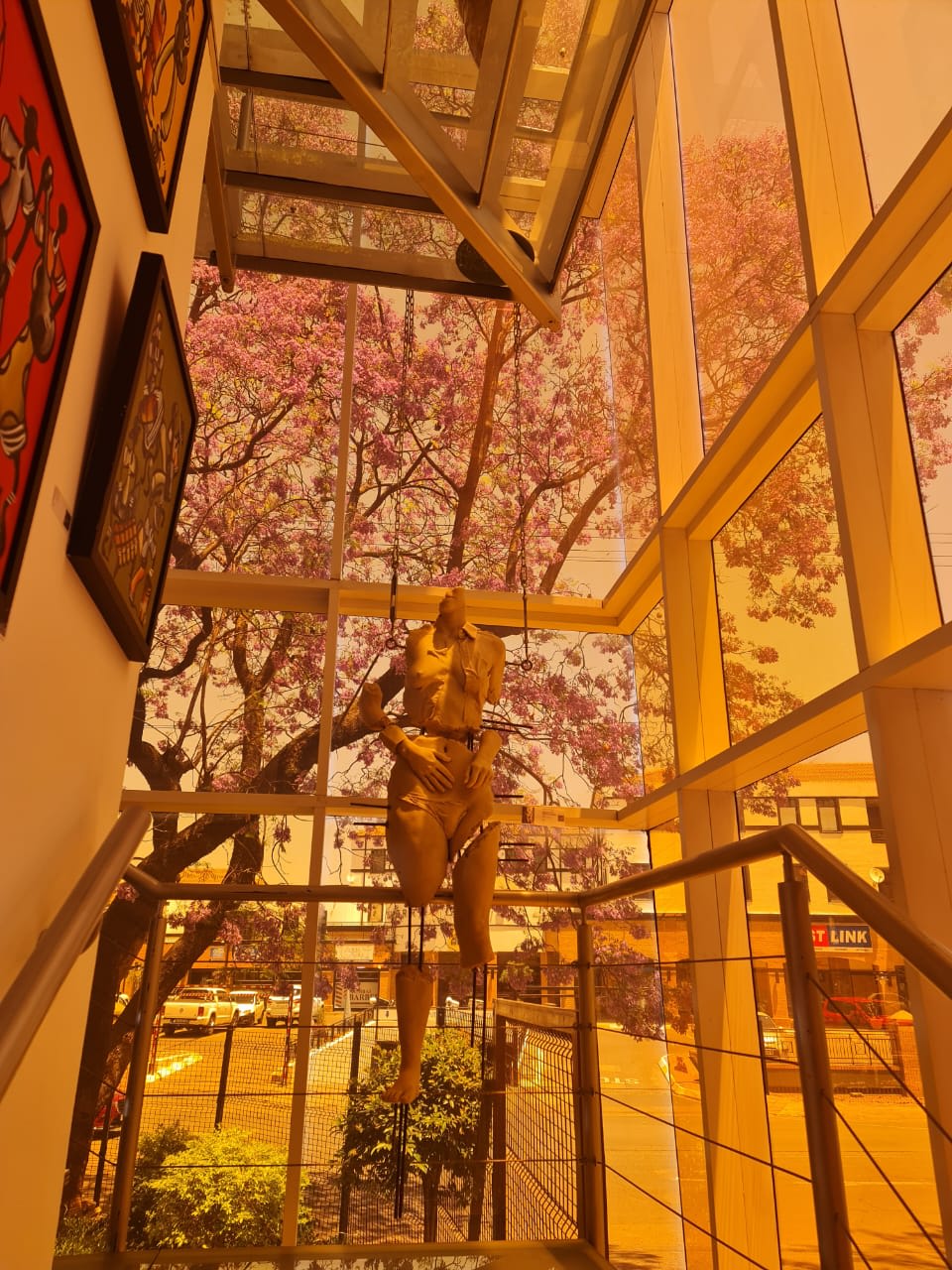
The Viewing Room Art Gallery at the St Lorient straddles Brooklyn Mall’s traffic circle in Pretoria — a little, cultural gem that juts out from the trees. Floor-to-ceiling windows, multiple exhibition floors and orange-tinted glass walls give the building a theatrical flair that you can’t help but be seduced into.
But away from the spacious buzz and drama of the rest of the gallery, tucked away on its upper floor was Divergence. The room was smaller than the others, and felt quieter… more intimate. The artworks were exhibited simply, either hung on paperclips or placed on simple platforms.
Divergence was a group exhibition featuring more than 20 artworks from 14 artists working across various mediums, and ran from October 2025 to January 2026. Per the title, the exhibition celebrated the individuality, creativity and diversity of its artists, exploring the idea of “Fitting in Otherness”.
One of the first things that struck me when I walked in was the sheer variety of artworks on display.
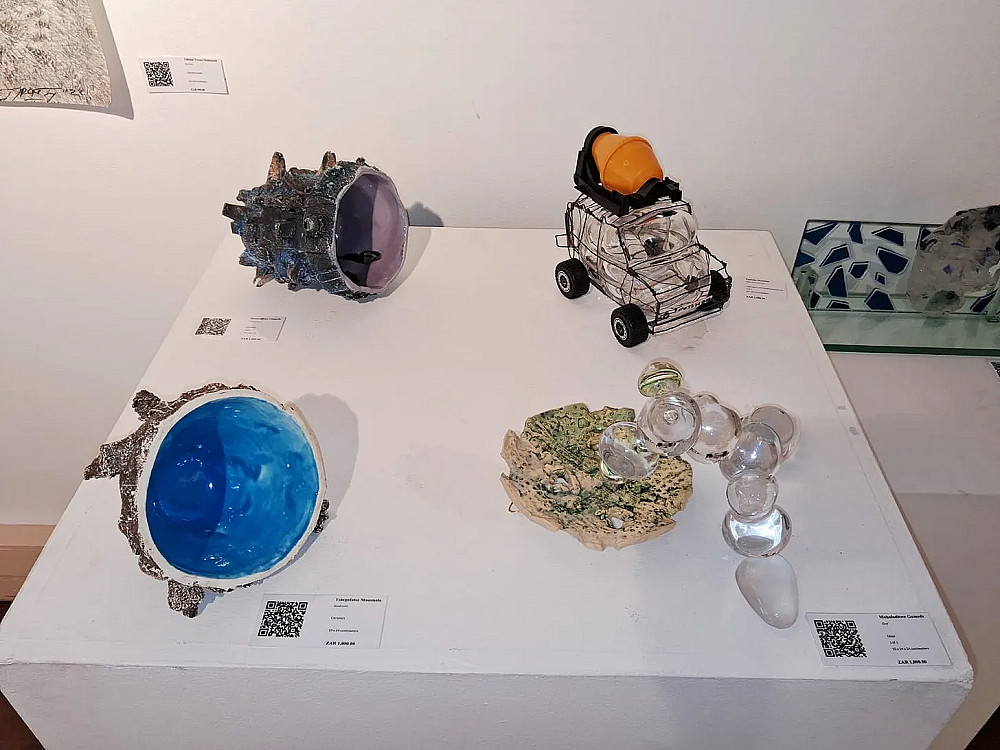
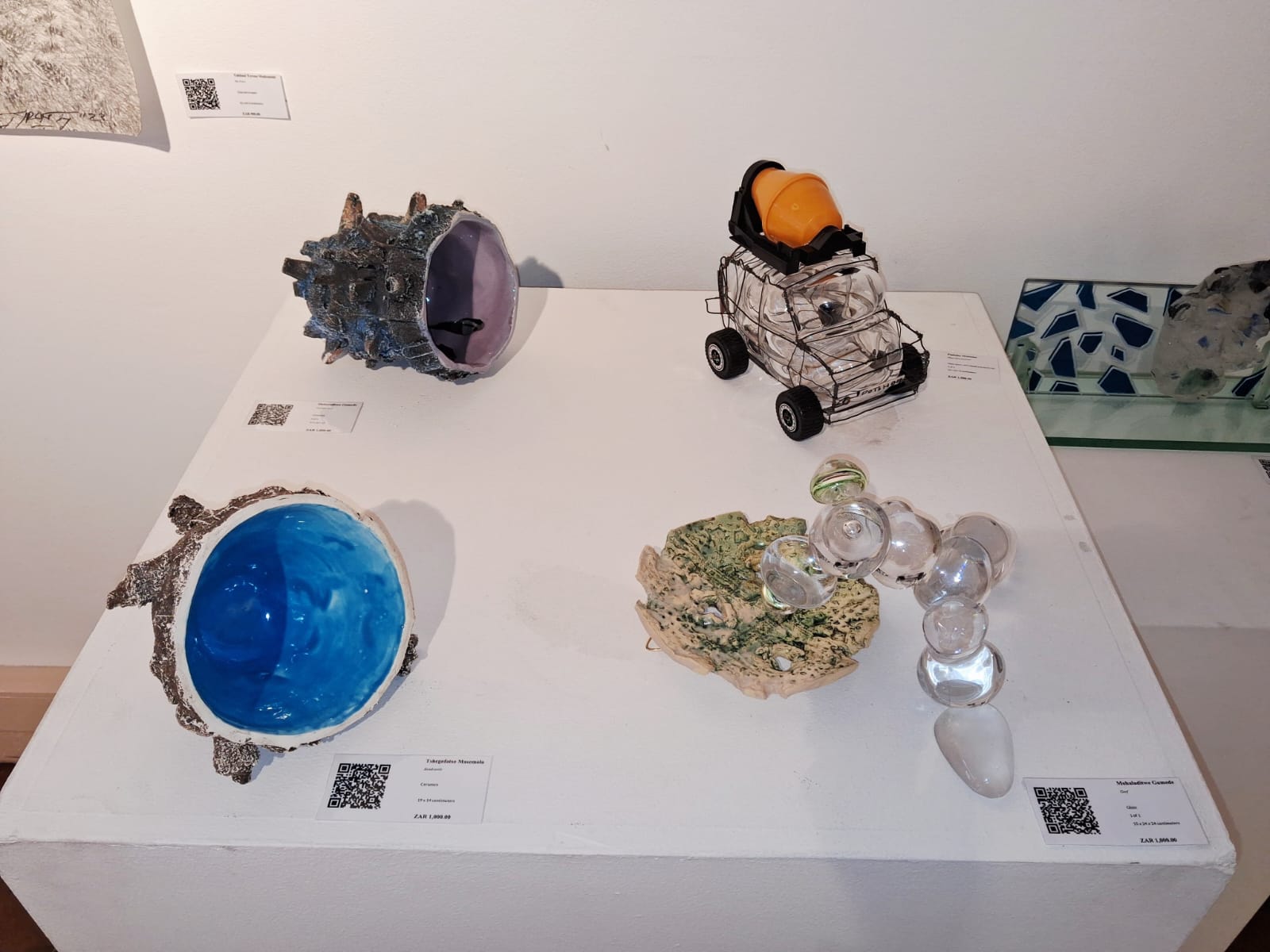
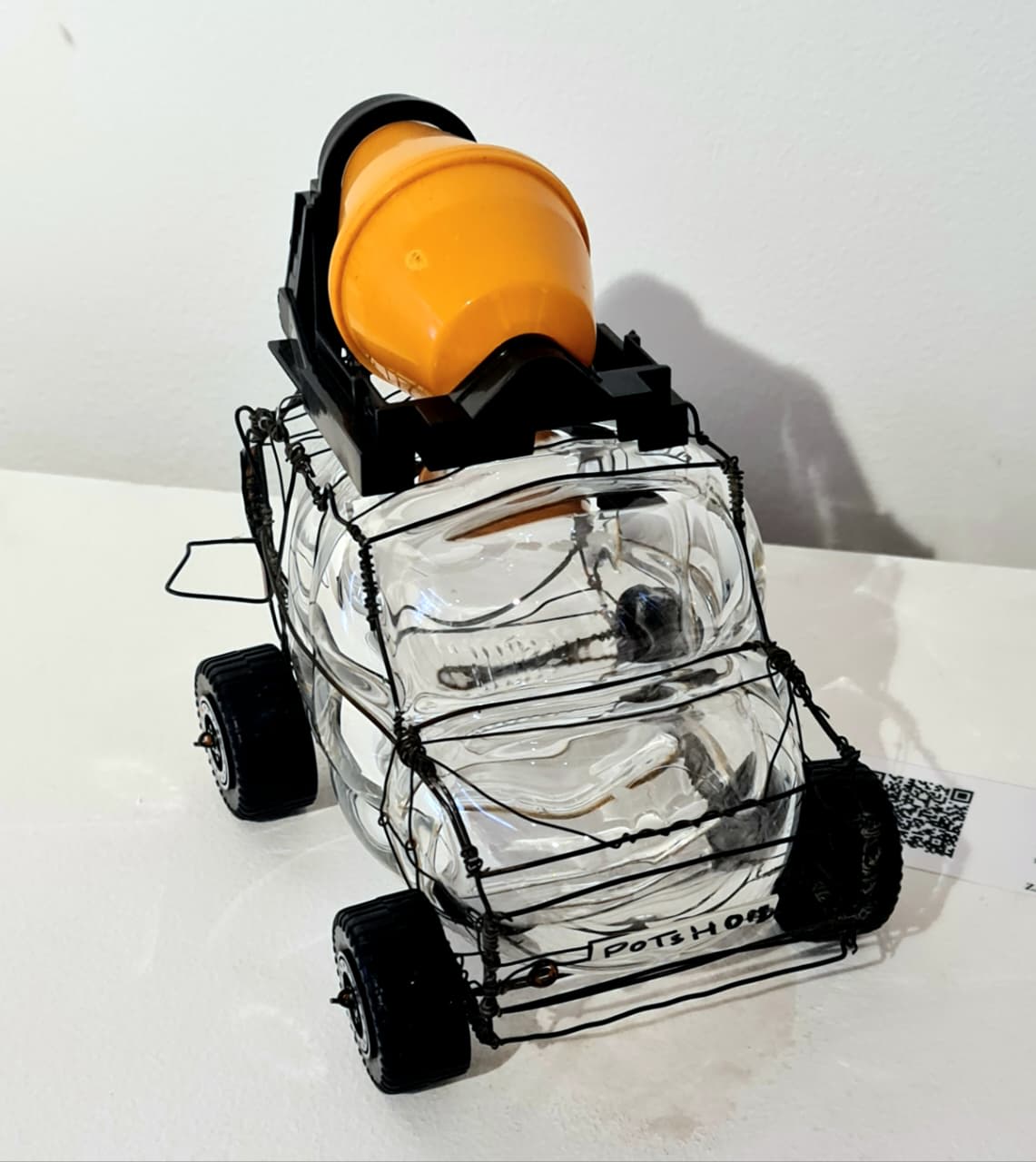
Ceramics, glass, pencil, pen, colour, black and white, wire, plastic, Lego… I couldn’t pin down how these works fit together. The aesthetics whipped you around — Pontsho Mahloko’s Mixer of Connection was a combination of wire and a literal plastic toy, whereas Tshegofatso Masemola’s Sandcastle was a geode-like ceramic work that looked like it was pulled from a meteor.
Khensani Tabase Nkosi’s abstract, orange silkscreen print titled Feel At Home, was starkly different from the smooth woodwork of Brian Gift Baloyi’s Sailed Boat.
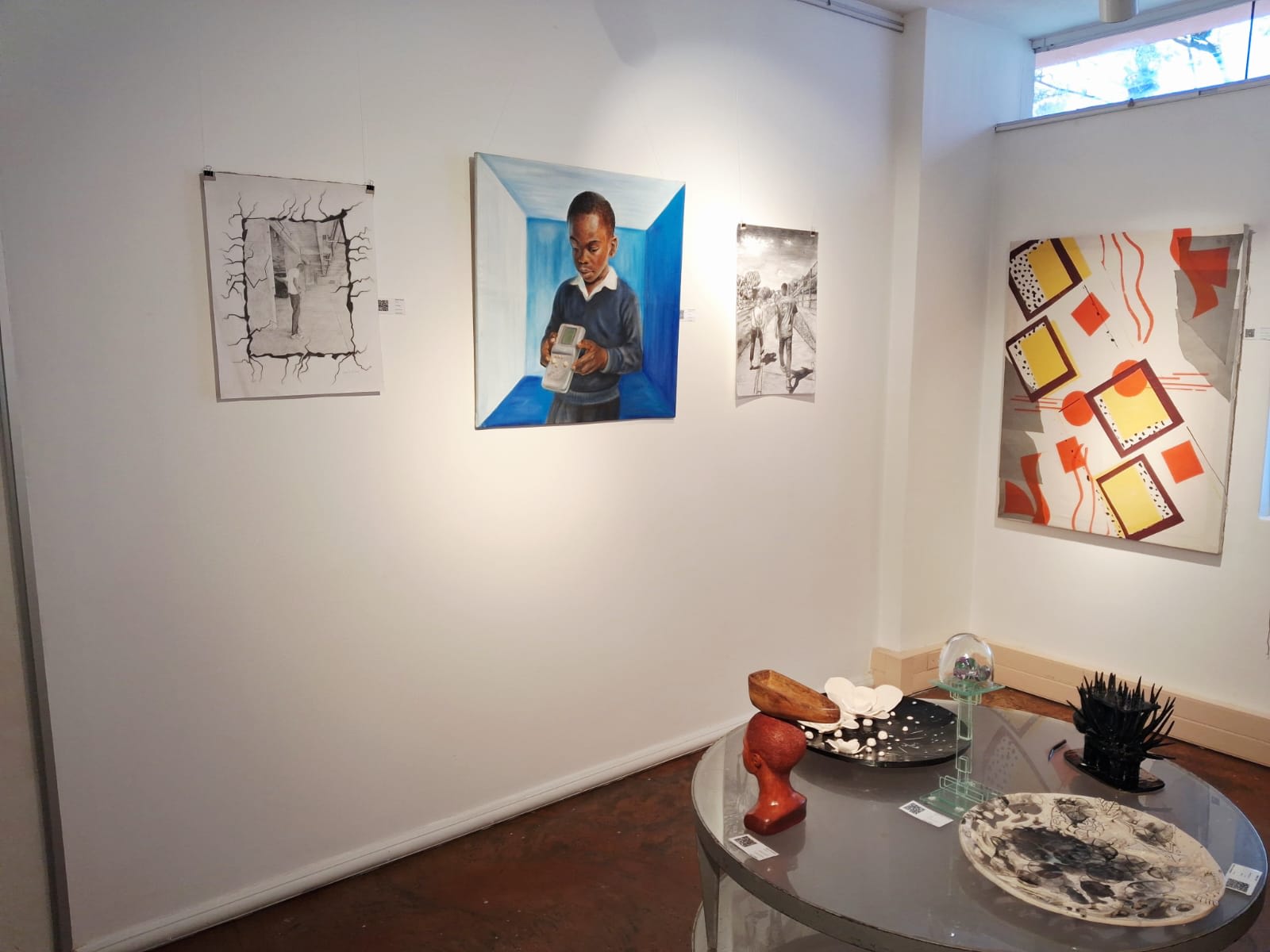
And in the same room as these 3-D and 2-D pieces? A ceramic shark’s head by Brian Gift Baloyi titled Ocean Bite, serving as both a poignant (albeit slightly endearing) comment on nature and our human impact on it.
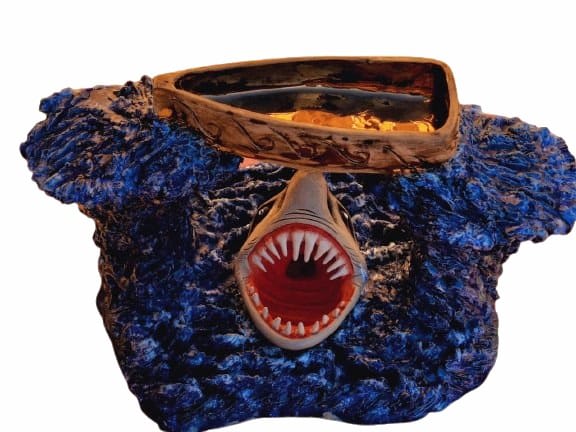
Looking at the room, the exhibition seemed almost random. We’re used to walking into galleries where the artworks are organised by medium, artist or subject matter, predictable and neatly unified — this is what constitutes a ‘serious’ art exhibition (or so we’re told). But Divergence, by virtue of the name itself, turned that upside down.
Divergence was not about cohesion — it was about process.
Gumede’s Artists: Young, Talented and Products of Their Process
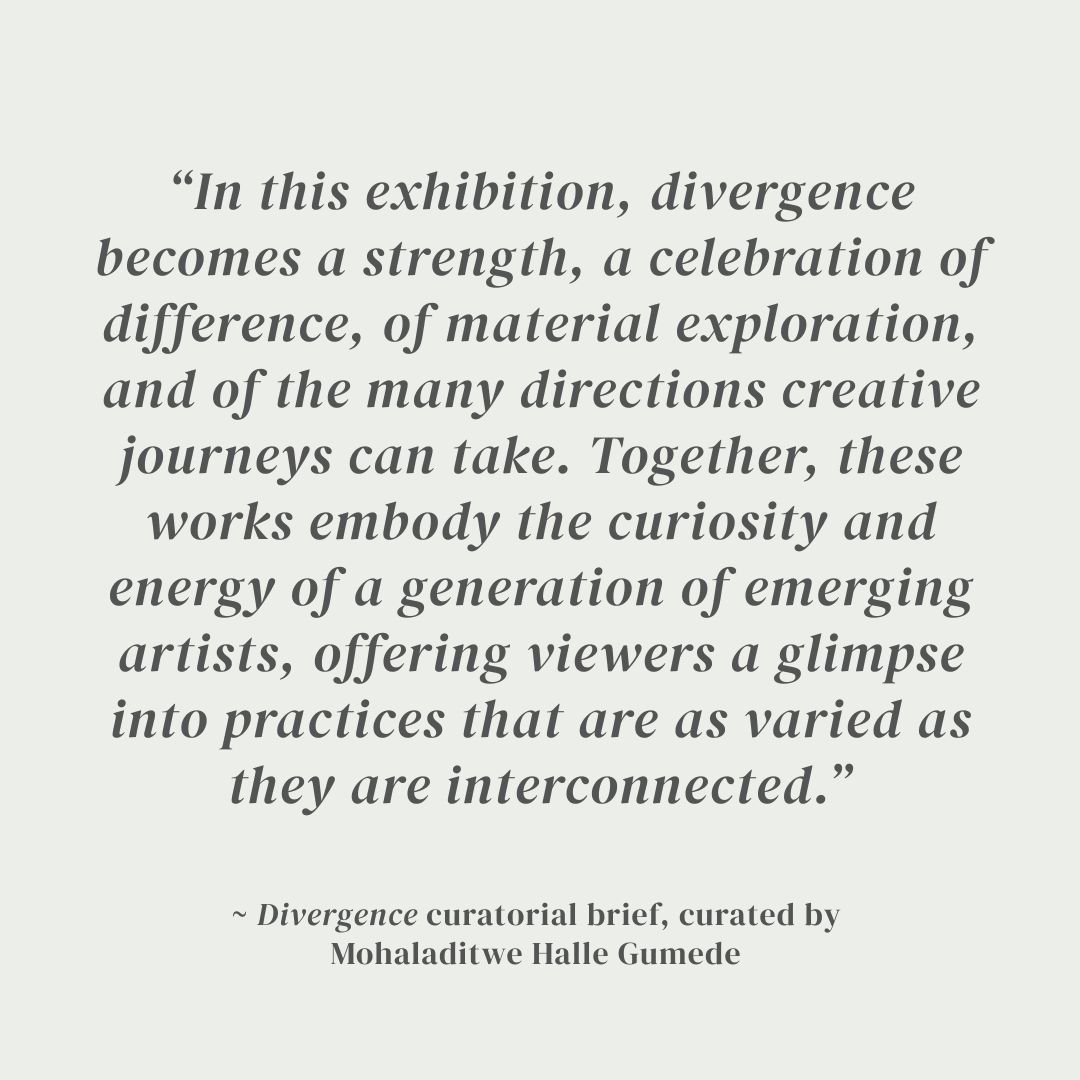
Divergence marked the first curated gallery exhibition of Fine Arts student, Mohaladitwe Halle Gumede. Collecting the works of her peers, Gumede titled the exhibition with their creative journeys in mind. “Divergence” refers to how the group began their studies together, unified in their discipline, before splitting up as each dove into the exploration of their own styles.
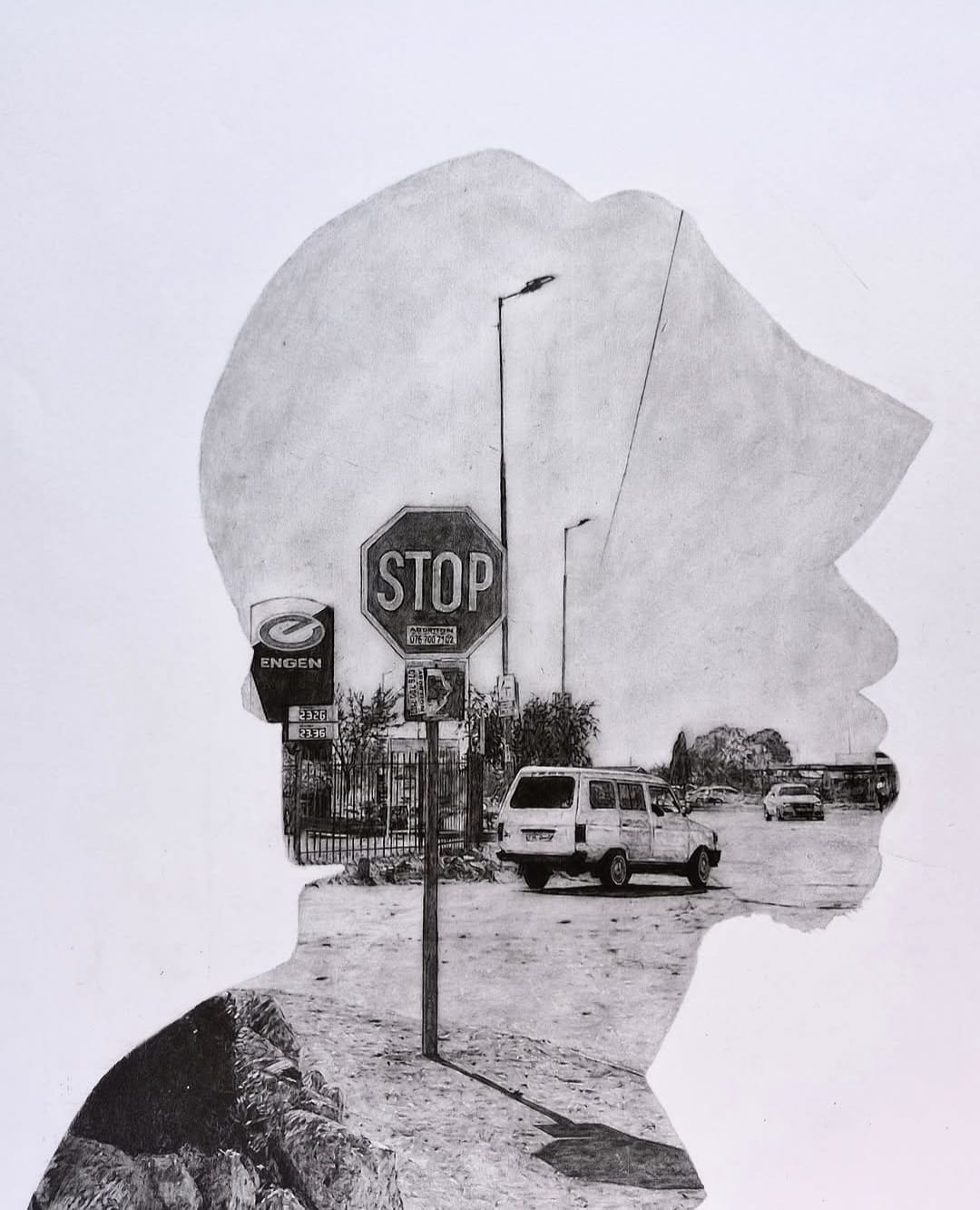
One of the artists that stood out to me was Njabulo Mlombo. Favouring the classic combination of graphite pencil on paper, Mlombo’s works were detailed and powerful. They captured a complicated relationship with his hometown of Soshanguve, giving his drawings a vulnerability that you could connect with before even knowing his story.
In contrast, there was Pontsho Mahloko’s Mixer of Connection — a seemingly playful recollection of the “draadkar”, a scrap wire car resourcefully made from recycled materials and a touch of township creativity.
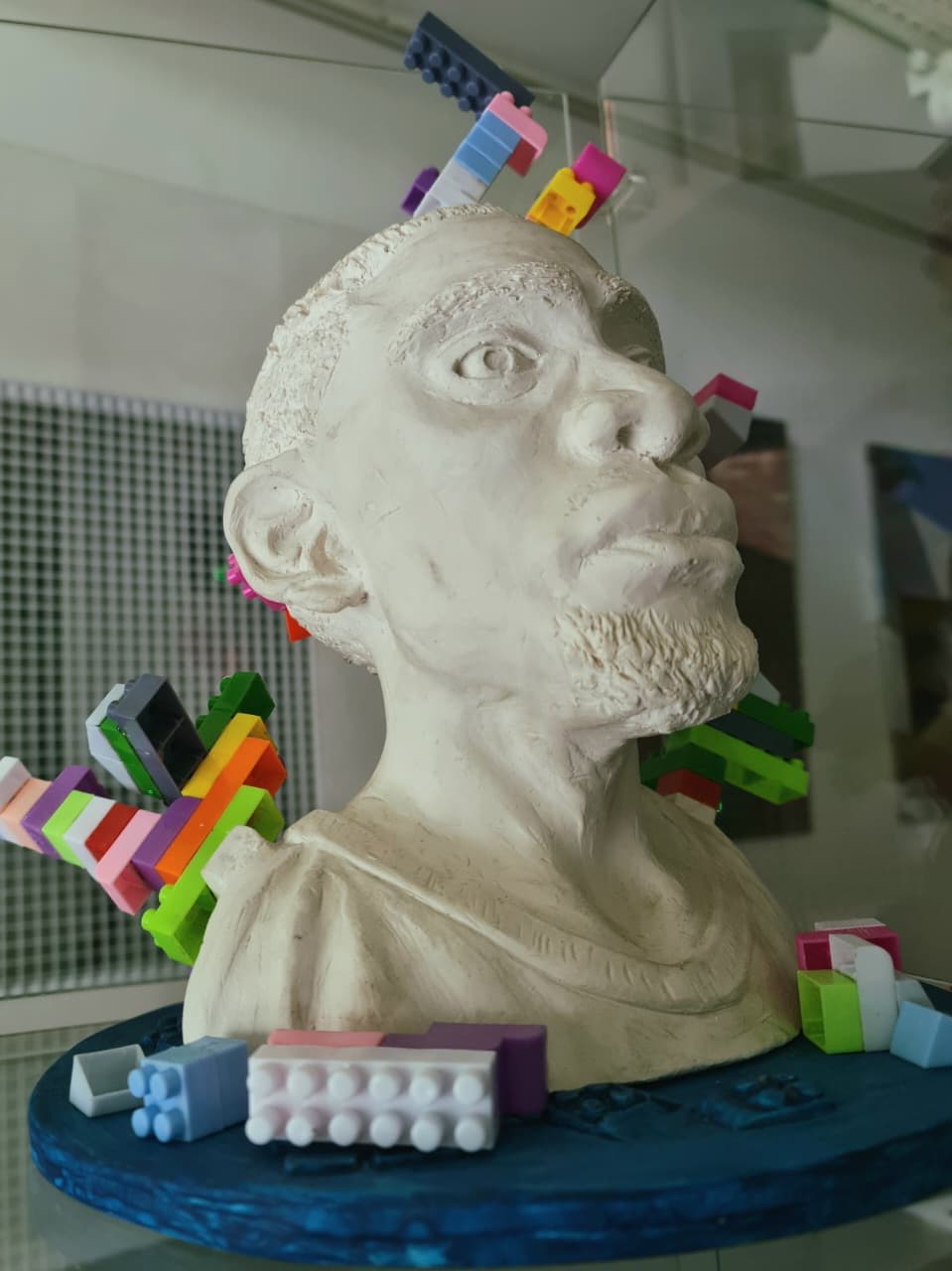
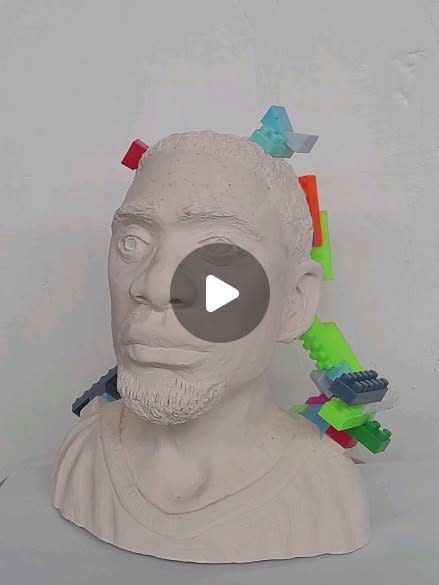
And perhaps the most unlikely medium that thrilled in this exhibition took the form of a Lego brick collection on Maqoba Maloma’s Plastic Foundations.
These unlikely combinations are more than imaginative patchwork. There is intention and meaning behind every choice, conceived through exploration, waiting to be uncovered.
Why choose pencil rather than the vibrancy of paint? Why use glass? Why Lego?
For Mlombo, the slow medium of pencil “[taught] him discipline, direction and an appreciation for time”. Drawing allowed him to lavish attention on a single thing, to cultivate a focus that almost becomes a meditation in the midst of chaos and violence.
Mahloko’s cement mixer, taken from a plastic toy, symbolises the turning of grief, constant yet always moving towards transformation. What used to be a playful toy car became a vehicle that carries the heavy, empty weight of loss, held with subtle, tender care.
And Maloma’s Lego bricks no longer carry the light joyfulness of youth, but weigh down on a heavily burdened head. None of us are strangers to that feeling — reminiscing about times when life felt lighter and play was easier. Maloma gives that bittersweet nostalgia a voice.
Making an artwork is more than technical skill — it’s finding meaning in the most unlikely of places. It requires exploring, experimenting and reflecting to uncover memories in forgotten objects.
Divergence was a testament to this, recognising the courage it takes not only to branch off from the norm, but to go inward, and lay your own heart out for the world to see.
A Homage to the Art of Art-Making
Different mediums. Different aesthetics. Different personal stories, all of which strike chords within us. Something like this can only be achieved after countless hours of exploration, self-reflection and practice. It requires testing the boundaries of your capabilities, dipping a finger into every paint pot until one comes out clean, searching for something in the fibres of the canvas or the contours of the glass.
In these things, the artist searches for himself.
Divergence, at its heart, pays homage to the process of creation. In its comfortable chaos, it raises a glass to the scrapped drawings, the burnt fingers and the quiet contemplation so vital to the creation of artwork but so invisible to the viewer.
It doesn’t distract us with perfectly organised colour schemes or gallery sections — it puts sculptures and paintings and shark heads in the same room and asks us to look away. To look beyond what we see and to imagine the young artist at 03:56 am, with nothing but a pencil, back pain and a calling.
The average time spent looking at a single artwork in a museum is 27 seconds. Just 27 seconds before moving onto the next shiny thing.
Perhaps if there’s anything we can take from this exhibition, it’s this: to look closer. Look slower. Look deeper. To put yourself in the shoes of the artist, imagining what the process feels like.
Maybe, the art might reveal itself.
Artist Plugs: Watch Them Come Up
Young, talented and promising — check out the works of some of Divergence’s most memorable.
Halle Mohaladitwe Gumede: https://www.instagram.com/halle_gumede/
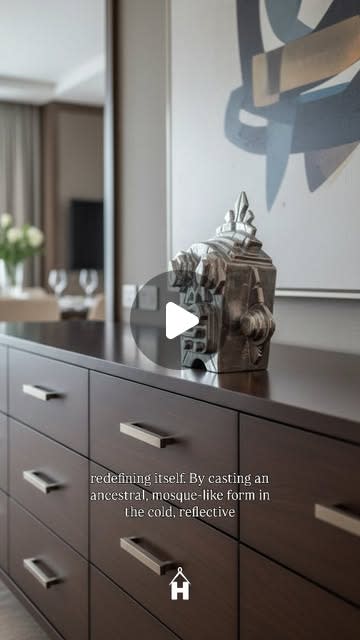
Njabulo Mlombo: https://www.instagram.com/njabulo_de_artist/

Maqoba Maloma: https://www.instagram.com/manqoba3055/
Tshegofatso Masemola:
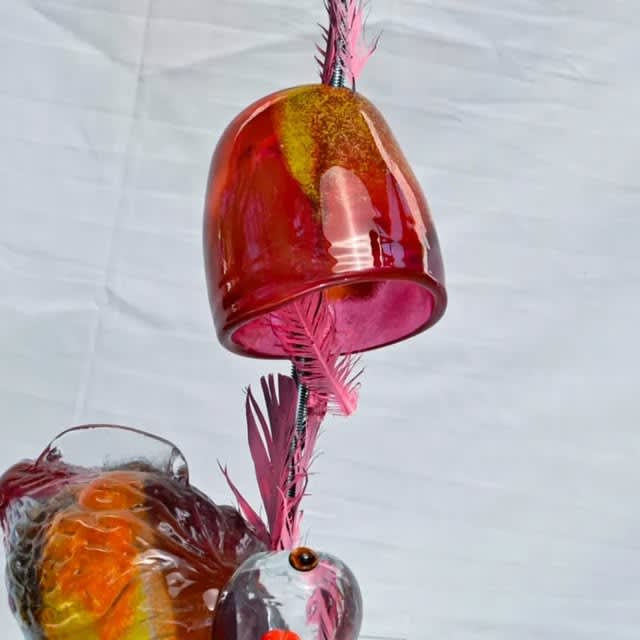
Tshilani Tyrone Mudzanani:
My hope is that I can bring artworks out of the white cube of the gallery, and put them in your hands. If this post brought you a little bit of joy, or made you see an obscure artwork in a new light, subscribe to Artfully Yours below!
Art is for everyone, after all. Why not make it yours?
Sources
The Viewing Room, LinkedIn, https://www.linkedin.com/in/the-viewing-room-art-gallery-48b77627a/recent-activity/all/ (30 Jan 2026).
The Viewing Room, Divergence, https://theviewingroom.co.za/exhibitions/divergence (30 Jan 2026).
Woza.art, The Viewing Room, https://woza.art/docs/events/the-viewing-room-st-lorient/divergence/?srsltid=AfmBOopNRs0H4aCkeUNkaR8UYUzS4e_hh-yqqiJ7kCDceXqCenhL1oIL
Mohaladitwe Halle Gumede on her first curated gallery exhibition, Instagram (18 Feb 2026).
M-Net, Carte Blanche, “Draadkar Grand Prix” (2022)
Smith, J. K., & Smith, L. F. (2001). Spending Time on Art. Empirical Studies of the Arts, 19(2), 229-236. https://doi.org/10.2190/5MQM-59JH-X21R-JN5J (Original work published 2001).